
Entry Points:

About Totem Park
On July 15 of 1741 the Russian ship St. Paul commanded by Alexei Chirikof, landed at Sitka, making the discovery of Alaska. Russia was anxious to make a claim in the New World and found that the furs of Sea Otter would fund the effort. The Russian-American Company was formed and, under the direction of Alexander Baranof, Fort Redoubt was built six miles north of present day Sitka. This was destroyed by Tlingit Warriors and in 1804 Baranof returned to re-stake the settlement.
Sitka National Historical Park preserves the area of the battle where the Tlingit Indians were defeated by the Russians in 1804. It was designated a National Park in 1972. It covers 113 acres and received 197,809 visitors in 1999.
After the battle, the Tlingit Indians left Sitka and the Russians made their new settlement in the existing Indian village, which became the capitol. It was at Sitka that the United States purchased Alaska from the Russians on October 18, 1867, and was the territorial capitol until 1912.
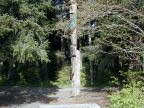
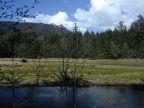
Sitka is located in a temperate rain forest, receiving 100 inches of rain annually. The park is covered by a forest of Western Hemlock and occasional Sitka Spruce, with Blueberry and devil's club in the undergrowth. it lies on the delta of the Indian River, flowing from the mountains to the northeast of Sitka.
For More Information:
See Wikipedia's article.